Golf in Scottsdale: Public, Resort and Private Courses Explained
Scottsdale golf comes in three flavors: public courses anyone can book, resort courses, and private clubs. Here is how each works, and when to play.
7 min read · The Scottsdale Lifestyle
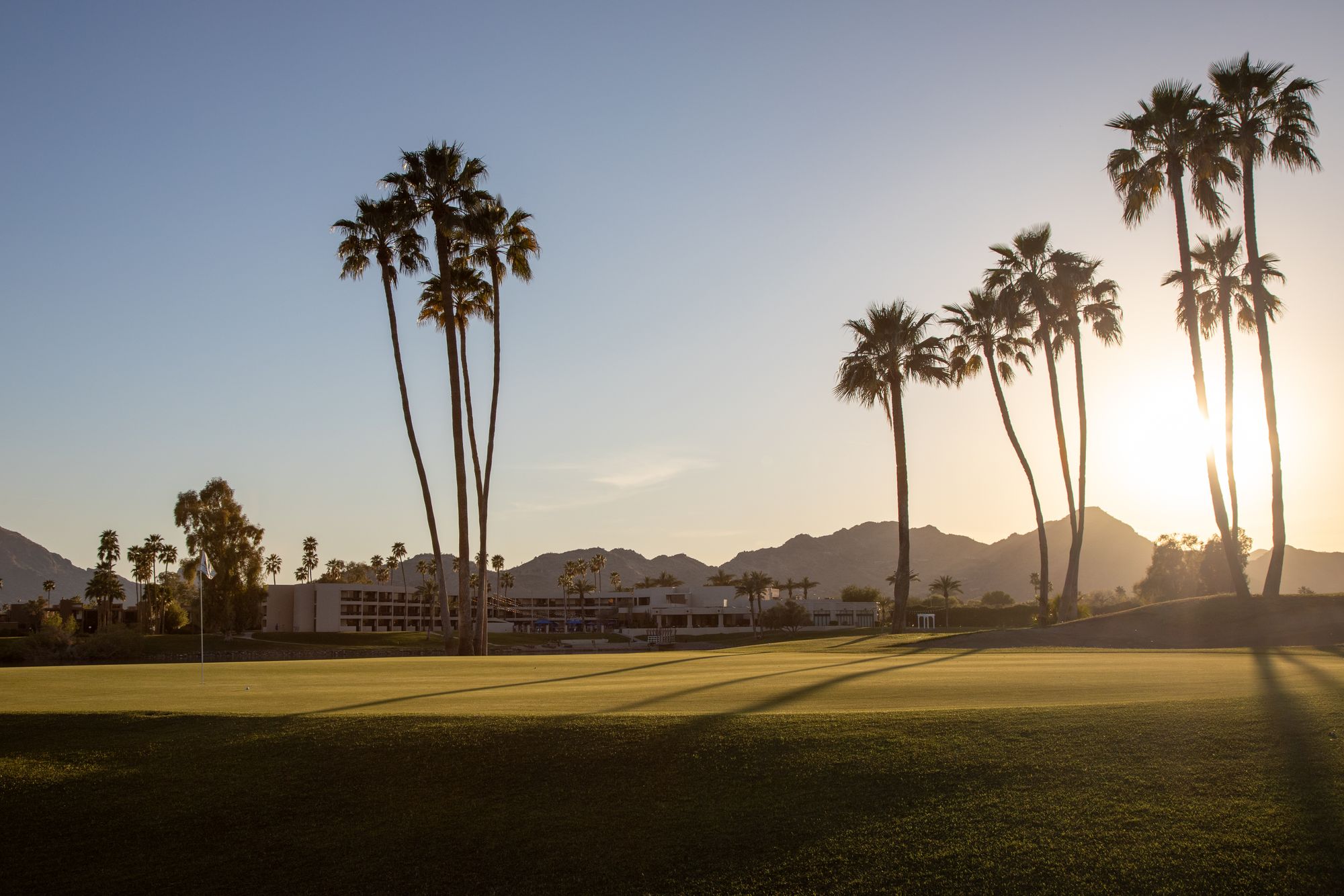
Golf in Scottsdale comes in three forms: public and daily-fee courses that anyone can book, resort courses tied to a hotel, and private clubs that require membership. Some of the area's best-known courses, including TPC Scottsdale, Troon North, and Grayhawk, are open to the public. The private clubs, many of them in North Scottsdale, work on membership models that vary from club to club.
Public and daily-fee courses anyone can play
These are the courses visitors and new residents usually start with. You book a tee time, pay a green fee, and play.
TPC Scottsdale. Two public courses run by the PGA Tour's TPC network. The Stadium Course, designed by Tom Weiskopf and Jay Morrish, hosts the WM Phoenix Open each February. The tournament was first played in 1932 and has been held at TPC Scottsdale since 1987. Its par-3 16th hole, ringed by grandstands during tournament week, is the only fully enclosed hole on the PGA Tour. The Champions Course, designed by Randy Heckenkemper, is generally considered the more forgiving of the two.
Troon North Golf Club. Two courses, Monument and Pinnacle, off Dynamite Boulevard in North Scottsdale, operated as daily-fee courses.
Grayhawk Golf Club. Two public courses, Raptor, designed by Tom Fazio, and Talon, on Thompson Peak Parkway in North Scottsdale.
McCormick Ranch Golf Club. Two public courses, the Palm and the Pine, on McCormick Parkway in central Scottsdale. These are lush, more traditional layouts than the high-desert courses up north, and the Palm was designed by Desmond Muirhead.
We-Ko-Pa Golf Club. Technically not in Scottsdale: We-Ko-Pa sits on Fort McDowell Yavapai Nation land just east of the city. Its 36 holes, the Saguaro course by Bill Coore and Ben Crenshaw and the Cholla course by Scott Miller, have no homes along the fairways. Saguaro is built for walking.
Talking Stick Golf Club. Another nearby option on the Salt River Pima-Maricopa Indian Community, bordering Scottsdale on the east. Its two courses, the O'odham and the Piipaash, were designed by Coore and Crenshaw.
Resort golf
Resort courses sit within or alongside a hotel. They are generally open for public tee times as well as to hotel guests, though policies vary.
The Phoenician Golf Club is the best-known example near Old Town: an 18-hole course designed by architect Phil Smith at the base of Camelback Mountain, managed by Troon, with tee times bookable online or by phone. Several of the public courses above also function as resort courses for nearby hotels.
What about municipal golf?
Scottsdale's closest thing to a municipal course is TPC Scottsdale itself. The city developed it on federal flood-control land leased from the Bureau of Reclamation and brought in the PGA Tour to run it, so it carries a public connection even though it plays at tournament level.
If you are looking for a traditional city-owned course, Papago Golf Club is owned by the City of Phoenix and sits a short drive southwest of Old Town, near Papago Park.
How private clubs work
North Scottsdale is home to a long list of private clubs, among them Desert Mountain, Desert Highlands, Silverleaf Club, The Estancia Club, Whisper Rock, Scottsdale National, and Mirabel, with others such as DC Ranch and Gainey Ranch closer in. Each sets its own rules, but a few patterns are common.
Membership types. Most private clubs offer full golf memberships, and many also offer social or limited memberships that include dining, fitness, or tennis with restricted or no golf privileges.
Equity and non-equity. In general terms:
- An equity membership gives you an ownership stake in the club, often with a vote on major decisions and a share of responsibility for any assessments. When you resign, the initiation may be partly refundable, but you typically keep paying dues until your membership is resold.
- A non-equity membership gives you use of the club without ownership or voting rights. You can usually leave at any time without further dues, but the initiation is not refunded.
Club documents vary, and the details matter. Read the membership agreement carefully before you commit.
Property requirements. Some clubs tie membership to owning property within the club community. Desert Mountain, for example, requires property ownership for a full golf membership, along with board approval. Other clubs accept members who live elsewhere.
Costs. Expect an initiation fee, ongoing dues, and at equity clubs, possible assessments. Amounts vary widely, so ask each club directly.
Playing as a guest. At private clubs, you typically play as the guest of a member. If a friend belongs, that is the easiest way to see a course before you think about joining.
When to play: Scottsdale's golf calendar
Peak season, winter. December through February is high season. Visitors from colder states arrive, rates are at their highest, and the best tee times go fast. For top courses like TPC Scottsdale and Troon North, book 60 to 90 days ahead.
Spring shoulder. As April and May arrive, rates begin to ease while the weather is still pleasant, especially in the morning.
Summer value. Summer is when Scottsdale golf is at its most affordable. The trade is heat, so play before 6 a.m. if you can, or take a shorter twilight round as the sun drops. North Scottsdale courses, at higher elevation, tend to run a few degrees cooler.
Fall and overseeding. Many courses overseed in the fall, typically in October, switching from summer Bermuda grass to winter ryegrass. Courses close or limit play for a few weeks while the new grass takes hold. The Phoenician, for example, closes for several weeks in October for its annual overseed. Large clubs often stagger the work across their courses, so one stays open. Check each course's overseeding schedule before you book an autumn trip.
Tee time tips
- Book directly with the course when you can, so you see current rates and policies.
- Ask about twilight rates year round, not just in summer.
- Confirm the overseed dates before planning golf in late September or October.
- Hydrate seriously from May through September, and carry more water than you think you need.
- Plan around the WM Phoenix Open week in February, when TPC Scottsdale and the surrounding roads are busy.
Finding your course
Start with one of the public courses to get a feel for desert golf, where missing the fairway means sand, rock, and cactus rather than rough. Play a few, and you will quickly learn whether you want the flexibility of public tee times or the rhythm of a home club.
Questions readers ask
Can the public play TPC Scottsdale?
Yes. Both the Stadium Course, home of the WM Phoenix Open, and the Champions Course are open to the public. Tee times can be booked through TPC Scottsdale, and peak-season times fill up well in advance.
When is golf season in Scottsdale?
Peak season runs roughly December through February, with spring as a pleasant shoulder season. Summer offers the lowest rates for early-morning or twilight rounds. Many courses close for a few weeks in fall, often in October, to overseed.
What is the difference between equity and non-equity club memberships?
An equity membership gives you an ownership stake and usually a vote, and part of the initiation may be refundable when your membership is resold. A non-equity membership gives you use of the club without ownership, and the initiation is typically not refundable. Terms vary by club, so read each agreement carefully.
Keep reading
 7 min read
Winters Here or All Year? How Seasonal Living in Scottsdale Works
Scottsdale runs on two calendars, a busy winter and a quiet summer. Here is how each one feels, and what it takes to live here part of the year.
 6 min read
Scottsdale HOAs and Master-Planned Communities: What to Know
Many Scottsdale homes come with one association or several. Here is how HOAs, master associations and design review work, and what Arizona says you receive before closing.
 7 min read
Living in Scottsdale: A Neighborhood-by-Neighborhood Guide
Scottsdale runs about 31 miles from end to end, so where you land shapes your week. Here is each major area by terrain, layout, landmarks and the drive to Old Town.