Scottsdale Summers: How Locals Actually Live in July
July in Scottsdale runs on a different clock. Here is how locals plan the day around the heat, the storms and the water.
7 min read · The Scottsdale Lifestyle
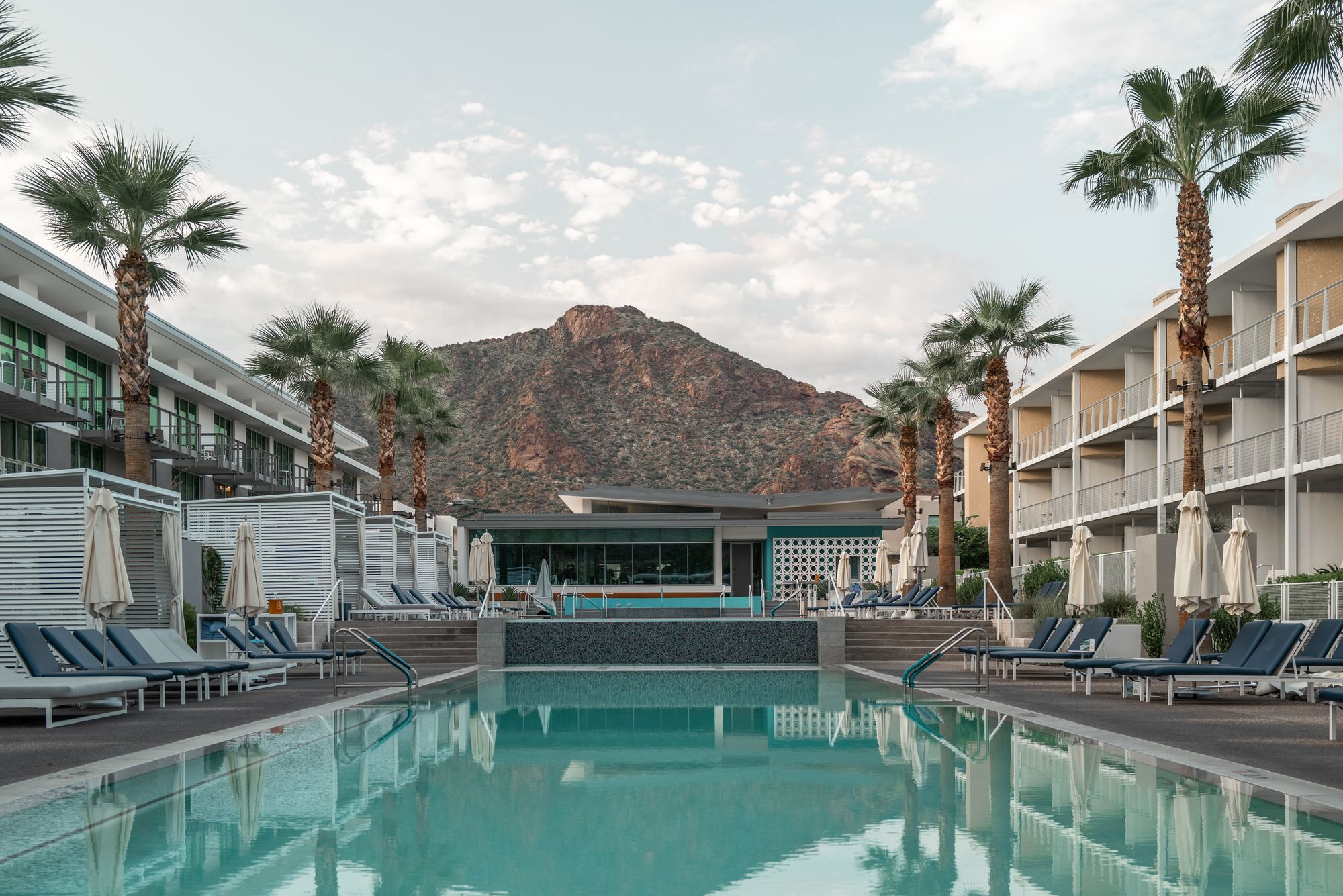
Locals live July by the clock. They are outside at first light, inside or in the water by midmorning, and back out after the sun drops behind the mountains. The heat is real, and the National Weather Service's normal July high at Phoenix Sky Harbor, the metro area's official climate station, is 106.5°F with a normal low of 84.5°F. Plan around it and summer becomes its own season, quieter and slower, with the city mostly to yourself.
The day starts at dawn
In early July, the sun rises a little after 5:20 a.m. and sets around 7:40 p.m. (Arizona stays on standard time all year, so there is no daylight saving shift to adjust for). Those early hours are the best of the day: dog walks, bike rides, a coffee on the patio while the air is still tolerable.
Errands follow the same logic. Groceries, appointments and anything that involves walking across a parking lot go better before noon. By midafternoon, the smart move is shade, air conditioning or a pool.
Evenings come back to life after sunset. Patios with misters fill up, and a walk at 8:30 p.m. feels very different from the same walk at 3 p.m.
On the trail: early, short and well supplied
The McDowell Sonoran Preserve is open every day from sunrise to sunset, and the city notes that gates open about 30 minutes before sunrise. In summer, that early window is the only one that makes sense. City officials encourage hikers to finish outdoor activity by 10 a.m.
Their summer advice is specific:
- Carry more water than you think you need, and turn around when half of it is gone.
- Hydrate before you start. The city suggests at least two cups of water two hours before activity, then about five ounces every 15 minutes on the trail.
- Choose shorter routes in warmer weather, and know your own limits.
- Tell someone where you are hiking, and carry electrolytes, a charged phone, navigation and a basic first aid kit.
- Wear lightweight, sun-protective clothing.
Know the warning signs. Heat exhaustion can look like heavy sweating, cool and clammy skin, lightheadedness, nausea and muscle cramps. Heat stroke can bring hot, red, dry skin with no sweating, a pounding headache and a fast, strong pulse, and it can lead to unconsciousness. That is a 911 call. Scottsdale Fire has rescued hikers who ran low on water at popular spots, including the Tom's Thumb Trailhead.
Before any outing, check the National Weather Service forecast. On the hottest days, it issues Extreme Heat Watches and Warnings for the Phoenix area.
Pets and hot pavement
Dogs feel the heat faster than people do, because they cannot cool themselves as efficiently. The preserve's rule of thumb is clear: if it will be over 90°F at any point during your hike, it is too hot for your dog. Dogs must also stay on a handheld leash no longer than six feet.
Pavement is the other hazard. Asphalt and concrete can run far hotter than the air. Pet advocates use a simple test: if you cannot hold your bare foot on the ground for seven seconds, it is too hot for paws. Walk dogs at dawn or after dark, stick to grass where you can, and consider booties for any midday trip outside.
Watch for heavy panting, drooling, bright red gums or lethargy. Any of those means water, shade and a call to your veterinarian.
Monsoon season
The National Weather Service defines monsoon season as June 15 through September 30. For much of July, that means rising humidity, building clouds over the mountains and, on some days, sudden storms with wind, lightning and heavy rain. Normal July rainfall at Sky Harbor is under an inch, so the storms are memorable more for their force than their totals.
Two rules every local learns:
- Never drive into a flooded road or wash. Under Arizona's "Stupid Motorist Law," a driver who goes around barricades into floodwater and needs rescue can be billed for that rescue. Turn around and find another way.
- Expect the occasional outage. Keep flashlights, charged batteries and a few gallons of water at home, and bring patio cushions and umbrellas inside when storms are in the forecast.
Haboobs
A haboob is a dust storm pushed by the outflow from a thunderstorm. Cold air from the storm rushes down, spreads across the desert and lifts a wall of dust at its leading edge. Strong ones can tower thousands of feet high, and ADOT warns that dense blowing dust can drop visibility to zero.
If you see one coming, exit the road or delay your trip. If it catches you, ADOT's rule is "Pull Aside, Stay Alive": slow down, pull completely off the paved roadway, set the parking brake, turn off all lights (including flashers), take your foot off the brake and wait it out with your seatbelt on. Turning off your lights matters: drivers behind you may think you have found the way out and follow your taillights.
Pool season, adjusted
By July, pool water gets warm enough that many locals swim early in the morning or after dark, when it feels most refreshing. A shaded corner, an umbrella or a covered patio next to the pool matters as much as the pool itself.
Summer is also when Scottsdale resorts court locals. Many roll out summer packages, spa offers and day programs, and room rates generally come down from their winter peak. A two-night staycation with a late checkout, a morning swim and an afternoon in the spa is a time-honored way to spend a July weekend without getting on a plane.
Shade, orientation and the house
Locals think about the sun's path the way people in colder places think about snow. A few principles:
- West-facing walls and windows take the hardest afternoon sun. Solar screens, exterior shades and trees on the west side help keep the house cooler.
- North- and east-facing patios are the comfortable outdoor rooms in summer, especially in the evening.
- Covered patios, shade sails and misters extend the hours you can spend outside.
- Service the air conditioning before summer arrives, and change filters more often while it is running hard.
Your car in the sun
A car parked in the July sun turns into an oven quickly. Locals build a few habits:
- Use a windshield sunshade every time you park outside, and look for covered or garage parking.
- Keep a towel or cover handy for the steering wheel and seat belt buckles.
- Never leave children or pets in a parked car, not even for a minute.
- Do not leave phones, laptops, medications or aerosol cans in the car.
- Keep a gallon of water in the trunk, and have the battery tested before summer, since heat is hard on car batteries.
Hydration as a habit
The most reliable summer habit is the simplest: a water bottle that goes everywhere with you. Drink before you feel thirsty, add electrolytes on active days, and remember that dry desert air carries sweat away so fast you may not notice how much you are losing.
Living the season
Summer in Scottsdale is not something to endure, it is something to schedule. Get out early, rest through the afternoon, come back out with the evening, and respect the storms. Do that, and July becomes the month when tee times are easier to book, restaurants are less crowded and the morning trails feel like your own.
Questions readers ask
How hot does Scottsdale get in July?
The National Weather Service's normal July high at Phoenix Sky Harbor, the official climate station for the metro area, is 106.5°F, with a normal low of 84.5°F. Individual days can run well above normal. Check the NWS Phoenix forecast for Extreme Heat Watches and Warnings before planning time outdoors.
When is monsoon season in Scottsdale?
The National Weather Service defines monsoon season as June 15 through September 30. Storms can bring strong winds, lightning, heavy rain, flash flooding and dust storms. Never drive into a flooded road, and follow ADOT's "Pull Aside, Stay Alive" steps in a dust storm.
Can I hike the McDowell Sonoran Preserve in summer?
Yes, if you go early and prepare. The preserve is open sunrise to sunset, and city officials encourage summer hikers to finish by 10 a.m., carry more water than they think they need and turn back when half of it is gone. Leave your dog home if it will be over 90°F at any point during the hike.
Keep reading
 6 min read
Which Way Should Your Backyard Face in Arizona?
In the desert, the direction your backyard faces decides when you can actually use it. Here is how the sun moves over Scottsdale and what each exposure gives you.
 7 min read
McDowell Sonoran Preserve Trailheads, Easy to Challenging
The preserve has trailheads across Scottsdale, and each one suits a different kind of hike. Here is where to start, what you will find there, and how to stay safe in the heat.
 7 min read
A Perfect Weekend in Old Town Scottsdale, Friday to Sunday
Old Town is just over a square mile, which means you can park once and walk the whole weekend. Here is how to spend Friday evening through Sunday like someone who lives here.